
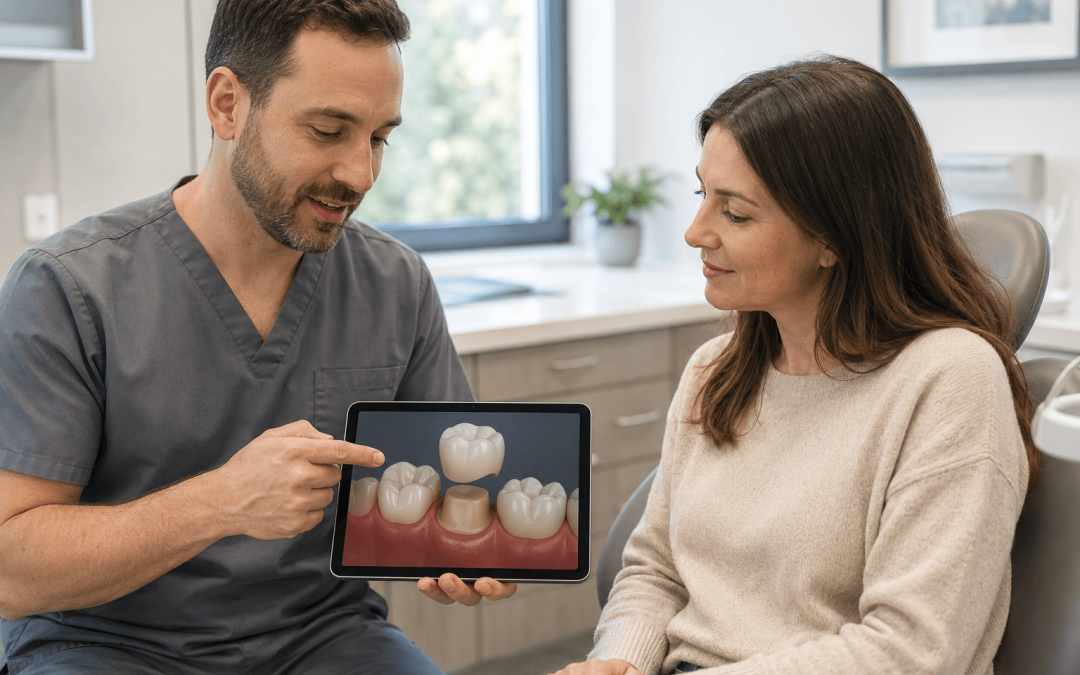
Same-day dental crowns and traditional crowns can both restore and protect a damaged tooth. The main difference is how and where the restoration is made. A same-day crown is produced in the dental office, while a traditional crown is typically made by an outside dental laboratory.
That difference can affect the number of appointments, whether a temporary crown is needed and which materials may be considered. For patients comparing dental crowns in Westmount, the right approach depends on the tooth, bite, aesthetic goals and a dentist’s assessment.
Same-Day Dental Crowns vs. Traditional Crowns: The Short Answer
Same-day crowns are designed and made in the dental office using CAD/CAM technology. When appropriate, the tooth can be prepared, digitally scanned and restored with its final crown during one visit.
Traditional crowns are generally produced by a dental laboratory. The patient typically receives a temporary crown after the tooth is prepared and returns for another appointment once the final restoration is ready. Exact workflows can vary by clinic and case.
What Is a Same-Day Dental Crown?
A same-day dental crown is a custom restoration that may be designed, fabricated and placed during one visit. Westmount Dental Care offers CEREC same-day crowns through its restorative, aesthetic and reconstructive dentistry services.
After determining that a crown is appropriate, the dentist prepares the tooth and captures a digital scan. Computer-assisted technology is used to design the restoration based on the prepared tooth and surrounding teeth.
The crown is then milled from a compatible dental material inside the office. Before placement, the dentist checks its fit, bite and appearance and makes adjustments when needed. Readers interested in the technical process can learn more about how CEREC technology works.
Although this is often called a one-visit process, it isn’t suitable for every tooth or treatment plan. The condition of the tooth, material required and complexity of the case can all affect the recommendation.
What Is a Traditional Dental Crown?
A traditional dental crown is usually fabricated by an outside dental laboratory. The dentist prepares the tooth and records the necessary information using a physical impression, digital scan or a combination of records.
Because the final restoration isn’t made during the initial appointment, the prepared tooth is commonly covered with a temporary crown. This protects the area while the laboratory completes the permanent restoration.
At a later visit, the temporary crown is removed and the final crown is assessed. The dentist checks how it fits against the prepared tooth, contacts nearby teeth and feels when the patient bites. Adjustments may be made before placement.
Traditional crown workflows can differ depending on the dental office, laboratory, selected material and complexity of the case.
Same-Day vs. Traditional Crowns: Key Differences
Both methods are intended to restore a tooth. The most noticeable differences involve the appointment process, fabrication and the need for a temporary crown.
Number of Visits and Waiting Time
A same-day crown may be prepared and placed during one visit when the tooth and treatment plan are suitable. Since several steps take place in the office, the appointment itself may be longer than one stage of a traditional process.
Traditional crowns usually involve an initial preparation appointment followed by a waiting period while the laboratory makes the restoration. The patient then returns to have the final crown evaluated and placed.
Digital Scans, Impressions and Fabrication
Same-day crowns generally use a digital scan to create a computer model of the prepared tooth. The restoration is then designed and milled using in-office CAD/CAM technology.
Traditional crowns may begin with a physical impression or digital scan, but the information is sent to a dental laboratory for fabrication. Digital scanning isn’t limited to same-day treatment. The main distinction is where and when the final crown is made.
Temporary Crowns
A temporary crown is often unnecessary when a same-day restoration can be completed and placed during the same appointment.
Traditional treatment commonly requires a temporary crown while the permanent one is being made. Patients may need to chew carefully and follow cleaning instructions during this period. The temporary crown isn’t intended to function as the final restoration.
Materials, Appearance and Fit
The available materials can differ between same-day and laboratory-made crowns. Selection may depend on the tooth’s location, the forces placed on it, the remaining tooth structure and the desired appearance.
Neither process guarantees that a crown will always be stronger, more precise or more natural-looking. The dentist must consider the material and how the restoration will function within the patient’s bite.
Any crown needs to be checked before final placement. The dentist will assess its fit, contacts, bite and appearance and make adjustments if necessary.
Adjustments and More Complex Cases
A same-day crown may be considered when the required design and material can be managed with the in-office system. Other situations may benefit from laboratory involvement because of the tooth’s location, material requirements, aesthetic considerations or case complexity.
This doesn’t mean traditional crowns are only used for complex cases. The recommendation should come from an individual assessment rather than convenience alone.
Which Type of Crown May Be Right for You?
The choice should begin with whether a crown is appropriate for the tooth. The dentist can then consider which material and fabrication method may support the treatment goals.
Important factors include the tooth’s location and condition, the amount of healthy structure remaining, the bite, existing dental work and aesthetic priorities. Gum health may also influence treatment planning.
A same-day crown may appeal to someone who wants to avoid a temporary restoration or a separate placement visit. It must still be clinically suitable, and the required material needs to be compatible with the in-office system.
A traditional crown may be recommended when laboratory fabrication or another material is more appropriate. In some cases, both approaches may be available. The dentist can explain the reasoning, limitations and practical differences before treatment begins.
Symptoms alone can’t determine whether a crown is needed. Pain, sensitivity or visible damage can have different causes and should be assessed before choosing a restoration.
What to Expect at a Crown Assessment
During an assessment, the dentist examines the tooth, surrounding gums and bite. Relevant diagnostic information may also be reviewed to understand the condition of the tooth and supporting tissues.
If a crown is recommended, the dentist can explain why it is being considered and which materials or fabrication methods may be appropriate. Patients can ask:
- Why is a crown recommended for this tooth?
- Could a same-day crown be considered?
- Which materials may be suitable?
- Would I need a temporary crown?
- How could my bite affect the plan?
- What factors could change the treatment process?
The goal is to develop a plan based on the individual tooth rather than using the same workflow for every patient.
Frequently Asked Questions About Same-Day and Traditional Crowns
Are same-day crowns as strong as traditional crowns?
A crown’s strength depends on its material, design, thickness, placement, the underlying tooth and the forces created by the patient’s bite. Neither type should be described as universally stronger.
The dentist can explain which materials are available through each process and which may be appropriate for the tooth being restored.
How long does a same-day crown appointment take?
There isn’t one fixed appointment length. The visit may include preparing the tooth, completing a digital scan, designing and milling the crown, checking its fit and placing it.
“Same-day” means the final crown may be completed during one visit when appropriate. It doesn’t mean every appointment follows the same timeline.
Do I need a temporary crown with a same-day crown?
A temporary crown is often unnecessary when the final restoration can be made and placed during the same appointment.
If the final crown can’t be completed as planned, the dentist may need to adjust the process. The need for a temporary restoration depends on the individual case.
Can every tooth be restored with a same-day crown?
No. Same-day dental crowns may not be appropriate for every tooth. The dentist must consider its condition and location, the bite, available materials and the complexity of the restoration.
An assessment can determine whether an in-office CEREC crown or laboratory-made restoration may be considered.
How much do same-day dental crowns cost?
Cost varies based on the tooth, material and treatment required. A general online comparison can’t confirm what a specific patient will pay.
Insurance coverage also varies between plans. The dental office can provide information about the proposed treatment after the tooth has been assessed.
Explore Your Crown Options at Westmount Dental Care
Same-day and traditional crowns can both restore damaged teeth, but they involve different fabrication and appointment processes. The most appropriate option depends on the tooth, material requirements, bite and individual treatment plan.
If you’re comparing crown options in Westmount or Montreal, contact Westmount Dental Care for an assessment. A dentist can examine the tooth and explain whether a same-day or traditional crown may be appropriate.